
Illuminating Your Aim in Any Light
In high-stress situations, the ability to quickly and accurately acquire your target can be the difference between success and failure. For firearm owners, this often hinges on the effectiveness of their night sights, especially in challenging low-light conditions. Night sights are among the most important accessories for shooters seeking to optimize their aiming capabilities in various conditions. While traditional iron sights rely on ambient light, modern night sights, particularly those utilizing tritium, offer a distinct advantage by providing a constant, self-illuminated aiming point. But with a spectrum of colors available—Chartreuse, Orange, and White being prominent choices—how do you determine the best night sight color for your needs? This comprehensive guide delves into the science behind night sight colors, explores the nuances of tritium sight brightness, and helps you make an informed decision to enhance your shooting performance.
The Critical Role of Night Sights in Self-Defense and Precision Shooting
Night sights are not merely an accessory; they are a crucial component for anyone serious about personal defense, law enforcement, or competitive shooting. Selecting the right handgun sights is essential for both self-defense and precision shooting, as they can significantly enhance your ability to quickly and accurately engage targets in various conditions. They provide a clear sight picture when visibility is compromised, ensuring that your aim remains true whether in dim indoor environments or under the cover of night. The choice of sight color directly impacts visibility, speed of acquisition, and overall confidence in your firearm.
The Color Conundrum: Chartreuse, Orange, or White?
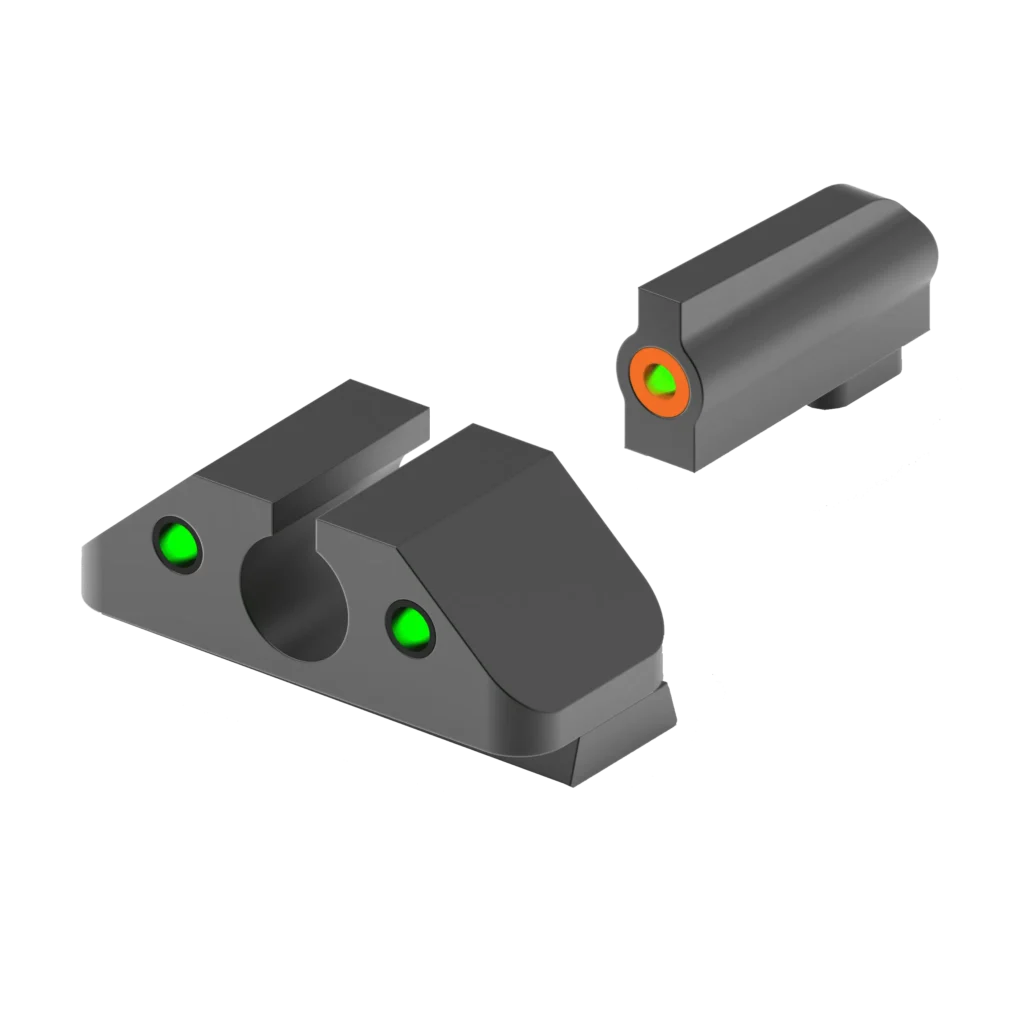
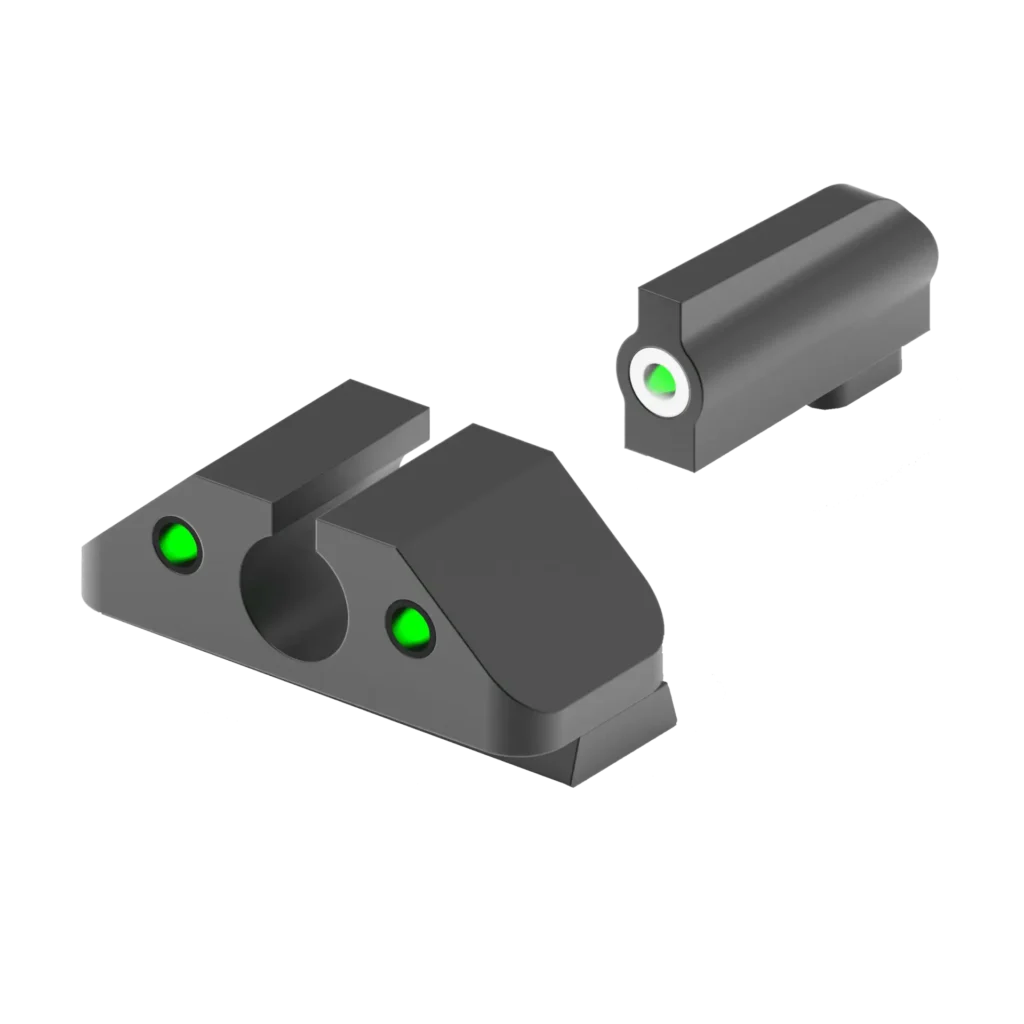
The market offers various color options, each with proponents and perceived advantages. North Forest Arms, for instance, provides its advanced dual picture tritium night sights with front sight options in Chartreuse, Orange, and White. Understanding the scientific principles that govern how our eyes perceive these colors in varying light conditions is paramount to selecting the optimal choice for your specific application.
II. The Science of Sight: How Our Eyes Perceive Color in Darkness
To truly appreciate the performance of different night sight colors, we must first understand the intricate workings of the human eye, particularly its adaptation to light levels.
Photopic vs. Scotopic Vision: Understanding Day and Night Perception
Our eyes operate under two primary modes of vision, dictated by the intensity of ambient light [1]:
Photopic Vision (Daylight Conditions): This mode is active in bright light (typically above 3 cd/m²). It relies on cones, photoreceptor cells responsible for high-resolution vision and color discrimination. In photopic vision, our eyes are most sensitive to light around 555 nanometers (nm), which corresponds to the green-yellow part of the spectrum.
Scotopic Vision (Low Light/Night Conditions): As light levels diminish (below 0.001 cd/m²), our eyes transition to scotopic vision. Here, rods become the dominant photoreceptors. Rods are highly sensitive to light, allowing us to see in near darkness, but they are achromatic—meaning they do not perceive color. Consequently, in scotopic vision, everything appears in shades of gray, black, and white. The peak sensitivity of our eyes shifts significantly to approximately 507 nm, falling within the blue-green portion of the spectrum [1].
The Purkinje Effect: Why Colors Shift in Low Light
The transition between photopic and scotopic vision gives rise to a fascinating phenomenon known as the Purkinje effect. This effect describes the tendency for the peak luminance sensitivity of the human eye to shift towards the blue end of the color spectrum as illumination levels decrease [2]. In practical terms, colors like blue and green appear relatively brighter in low light compared to red and yellow. Conversely, red and orange objects tend to appear darker, or even black, in very dim light, as our eyes sensitivity to these longer wavelengths diminishes [2]. This physiological shift is critical when evaluating the effectiveness of different night sight colors.
Deconstructing Night Sight Colors: A Brightness Comparison
With an understanding of how our eyes perceive light and color, we can now analyze the performance of Chartreuse, Orange, and White night sights in various conditions. Choosing the right color can increase visibility and acquisition speed in both bright and low-light environments. Additionally, increasing the contrast or brightness of the front sight can further enhance aiming performance.
Chartreuse: The Low-Light Champion?
Chartreuse, a vibrant yellow-green hue, sits strategically close to the peak sensitivity of both photopic (555 nm) and scotopic (507 nm) vision. This unique spectral position makes Chartreuse an exceptionally versatile and effective color for night sights. In daylight, its bright, distinct presence ensures rapid front sight acquisition. A Chartreuse front post can be especially effective for rapid sight acquisition in low-light conditions, as it stands out clearly against most backgrounds and aids in aligning the front post with the rear sight notch. More importantly, in low-light and nighttime scenarios, Chartreuse benefits significantly from the Purkinje effect. Its proximity to the eye’s peak scotopic sensitivity means it maintains high visibility, often appearing brighter than other colors as ambient light fades [3]. Many shooters find Chartreuse to be the last highly visible color to disappear in dim conditions, making it a strong contender for the best night sight color for those prioritizing low-light performance and rapid target acquisition under stress.
Orange: High Contrast, But How Does it Fare in the Dark?
Orange is a popular choice for many shooters, particularly for its high contrast against many backgrounds in bright daylight. Its vivid appearance can draw the eye quickly to the front sight, aiding in fast target acquisition during the day. An orange post on the front sight provides excellent contrast in daylight, but may lose its visibility as ambient light diminishes. However, when light levels drop, Orange’s performance is impacted by the Purkinje effect. As our eyes shift to scotopic vision, sensitivity to longer wavelengths like orange diminishes. This means that while an Orange sight might be brilliant in full sun, it will appear significantly dimmer, or even fade to a dull gray, in low light compared to colors closer to the blue-green spectrum. While still offering some contrast, especially if tritium-illuminated, its inherent visibility in true darkness is generally less than Chartreuse or green. For those who primarily shoot in well-lit environments or prioritize daytime contrast, Orange can be an excellent choice, but its low-light efficacy should be carefully considered.
White: The Classic Choice – Clarity or Compromise?
White is a classic and often default choice for many firearm sights. In photopic conditions, a crisp white dot provides excellent contrast against dark targets and backgrounds, offering a clean and precise aiming point. A crisp white dot can also facilitate precise sight alignment for shooters who prefer a clear and direct aiming reference, helping ensure the front and rear sights are properly aligned for maximum accuracy. In low-light conditions, however, White presents a different dynamic. As scotopic vision takes over and color perception is lost, a white sight will appear as an achromatic (gray/white) point. Its visibility will depend entirely on its luminance and how well it contrasts with the surrounding environment. While a tritium-illuminated white dot will glow, it does not benefit from the Purkinje effect’s enhancement of specific wavelengths. It provides a clear, uncolored reference point, which some shooters prefer for its simplicity and directness, but it may not
possess the same perceived brightness or “pop” as Chartreuse in very low light.
Tritium Technology: The Heart of Reliable Night Sights
The glowing element in modern night sights is typically powered by tritium, a radioactive isotope of hydrogen. Unlike battery-powered sights that must be charged to provide illumination, tritium night sights are always ready and do not require charging to remain visible in low-light conditions. Understanding this technology is key to appreciating the quality and longevity of premium night sights.
How Tritium Works: Constant Illumination, No Batteries Required
Tritium undergoes a process of beta decay, releasing electrons that strike a phosphor-coated surface inside a sealed glass vial. The tritium vial works in conjunction with the phosphor coating to create a visible glow. This interaction causes the phosphor to fluoresce, or glow, creating a self-sustaining light source that requires no external power or charging. This makes tritium sights incredibly reliable for self-defense and tactical applications, as they are always ready, regardless of the time of day or exposure to light.
The Role of Phosphor Coatings in Tritium Color Output
The color of the tritium glow is not determined by the tritium itself, but by the specific phosphor compound used to coat the inside of the vial. Different phosphors produce different colors, allowing manufacturers to offer a range of options like green, yellow, orange, and white. The quality and composition of this phosphor coating play a significant role in the initial brightness and long-term durability of the sight’s glow.
Additionally, some modern night sights incorporate fiber optics alongside tritium to maximize visibility in both daylight and low-light environments.
Tritium Brightness: What to Expect from Quality Sights
All tritium has a half-life of approximately 12.3 years, meaning that after this period, it will glow with about half its original intensity. However, the initial brightness and perceived longevity can vary between manufacturers. North Forest Arms utilizes high-quality TRUGLO Swiss tritium, renowned for its exceptional brightness and durability, ensuring a reliable sight picture for years to come. Each set of tritium night sights is engineered for consistent brightness and long-lasting performance.
North Forest Arms: Superiority Through Innovation
While the choice of color is a critical factor, the overall design and engineering of the sight system are what truly elevate a firearm’s performance. The way these elements work together ensures faster target acquisition, improved precision, and reliable alignment for shooters. North Forest Arms has distinguished itself in the market through a commitment to innovation and quality.
Dual Picture Sight Technology: Concentric Circle Alignment for Natural Aiming
North Forest Arms signature dual picture sight technology offers a unique and intuitive aiming solution. This system features a large front sight with a colored ring and a tritium vial, paired with a rear sight that creates a concentric circle alignment. This design helps shooters maintain proper sight angles for consistent accuracy. It promotes natural, instinctive aiming, allowing the shooter to focus on the target while the sights naturally align in their peripheral vision. This is a significant advantage over traditional three-dot systems, which can be slower and less intuitive, especially under stress.
Stress Shooting Optimization: Designed for Real-World Scenarios
The dual picture sight system is specifically optimized for stress shooting. In a high-pressure situation, fine motor skills can degrade, making precise alignment of traditional sights difficult. The concentric circle design of North Forest Arms sights simplifies the aiming process, enabling faster and more accurate shots when it matters most. This system allows shooters to quickly change their focus between the target and sights, making it easier to adapt under stress and maintain accuracy.
Made in USA with TRUGLO Swiss Tritium: A Commitment to Quality
North Forest Arms sights are proudly made in the USA, ensuring stringent quality control and craftsmanship. Advanced surface treatments are applied to provide protection against corrosion and wear, helping to protect the sights for long-term use. The use of TRUGLO Swiss tritium further underscores their commitment to providing a premium product with superior brightness and longevity. This combination of American manufacturing and top-tier components results in a night sight that shooters can depend on.
Compatibility Across Leading Handguns: Glock, Sig Sauer, Walther, Ruger
North Forest Arms offers its innovative sight systems for a wide range of popular handgun models, including Glock, Sig Sauer P365/P320, Walther PDP, and Ruger RXM. These sights are designed to fit a wide range of pistols, ensuring that users can upgrade their preferred firearm with ease. This broad compatibility ensures that a wide array of firearm owners can benefit from their advanced technology.
Beyond Color: What Makes a Night Sight Truly Exceptional?
While color is a key consideration, several other factors contribute to the overall quality and performance of a night sight. Lightweight construction can further enhance usability and comfort, making sights easier to handle and reducing fatigue during extended use.
Durability and Construction: Built to Last
Night sights must be able to withstand the rigors of daily carry, training, and potential impacts. North Forest Arms sights are constructed from durable steel, ensuring they can endure harsh conditions and maintain their zero.
Ease of Installation and User Experience
A quality night sight should be easy for a qualified gunsmith to install and should provide a seamless user experience. The design should be snag-free for concealed carry and offer a clear, unobstructed sight picture.
The Importance of a Clear Sight Picture
Ultimately, the goal of any sight system is to provide a clear and accurate aiming reference. The combination of a bright, colored front sight and a well-designed rear sight, like the dual picture system from North Forest Arms, is crucial for achieving this. Precise sight alignment is especially critical in match settings, where accuracy is paramount and even minor deviations can affect competitive shooting performance.
Competitor Landscape: North Forest Arms vs. The Field
To provide a complete picture, it’s helpful to compare North Forest Arms with other leading brands in the night sight market. Different brands offer a range of features and adjustment options, allowing users to select sights based on their preferred order of functionality, such as the order of adjustment or calibration intervals.
Trijicon: A Market Leader and Its Offerings
Trijicon is a well-respected brand known for its durable and reliable night sights, with their HD and RMR lines being particularly popular. Trijicon sights are widely used in military applications due to their military-grade durability and reliability. While Trijicon offers excellent products, they often come at a premium price point (e.g., Trijicon HD sights at $182.00). Their traditional three-dot systems, while effective, may not offer the same intuitive aiming experience as North Forest Arms’ dual picture technology.
TruGlo: Diverse Options and Price Points
TruGlo offers a wide range of sight options, from fiber optic to tritium, at various price points ($76.99 – $169.99). Their fiber optic sights are popular for their bright, quick target acquisition in both daylight and low-light conditions. They are a major player in the market and are known for their TFX (Tritium + Fiber-optic Xtreme) technology. While TruGlo provides many choices, North Forest Arms focuses on a specialized, high-performance system designed for optimal stress shooting performance.
North Forest Arms' Unique Advantages: Dual Functionality and Natural Alignment
North Forest Arms carves out a unique position in the market by focusing on a system that is both highly effective and naturally intuitive. The dual picture sight technology is a key differentiator, offering a tangible advantage in speed and accuracy, particularly in high-stress scenarios. This system also helps shooters quickly acquire moving targets by providing a clear and intuitive sight picture, making it easier to track and engage targets in motion. When combined with their competitive pricing ($149.95 for tritium sights), American manufacturing, and use of premium components, North Forest Arms presents a compelling value proposition for the discerning shooter.
Choosing Your Ideal Night Sight Color: Practical Advice
So, what is the best night sight color for you? The answer depends on your individual needs and preferences. Choosing the right night sights ensures you are never left at a disadvantage, even in the darkest environments.
Consider Your Primary Use Case: Concealed Carry, Home Defense, or Range?
For concealed carry and home defense, where low-light encounters are a primary concern, Chartreuse is arguably the superior choice due to its high visibility in scotopic conditions.
For range use and competitive shooting, where bright light is more common, Orange can be an excellent option for its high contrast.
For those who prefer a classic, no-frills sight picture, White remains a viable and effective choice.
For hunting, high-visibility night sights can improve accuracy during early morning or dusk conditions, making it easier to acquire targets in challenging light. Certain colors, such as Chartreuse or Orange, may be preferred for hunting applications depending on the environment and game.
Personal Preference and Testing: What Works Best for You?
Ultimately, the best way to determine your ideal sight color is to test different options and see what your eyes pick up fastest and most clearly in various lighting conditions. If possible, try out firearms equipped with different colored sights to get a feel for what works best for your individual vision.
The North Forest Arms Advantage: Confidence in Any Condition
Regardless of your color choice, opting for a high-quality sight system like the one offered by North Forest Arms ensures you have a reliable, durable, and intuitive aiming solution that will perform when you need it most. Their advanced sight systems can enhance the performance of any gun, regardless of make or model. Their dual picture technology provides a distinct advantage that can enhance your shooting performance across all lighting conditions.
Conclusion: Elevate Your Accuracy with North Forest Arms
The debate over the best night sight color is multifaceted, with scientific principles and personal preferences both playing a significant role. Chartreuse offers a clear advantage in low-light conditions due to the Purkinje effect, making it an excellent choice for defensive applications. Orange provides superb contrast in bright light, while White offers a classic, clear aiming point. However, the color of your front sight is only one piece of the puzzle. A truly exceptional aiming solution combines a highly visible front sight with an intuitive, well-designed rear sight system.
North Forest Arms‘ dual picture tritium night sights, with their concentric circle alignment, stress shooting optimization, and premium American-made quality, provide a superior aiming experience that can elevate your accuracy and confidence. While this article focuses on handguns, it’s important to note that tritium night sights can also offer significant benefits for shotguns and revolvers, especially in low-light scenarios. Don’t compromise on your sight picture. Explore the innovative solutions from North Forest Arms and discover the difference that a truly advanced sight system can make.
Ready to upgrade your sights?[[Click here to explore the full range of North Forest Arms Tritium Night Sights and find the perfect color for your firearm!]](LINK 1)
References
[1] AZoM. (2018, February 20). *How Does the Human Eye Perceive Light? Photopic and Scotopic Vision*. AZoM.com. Retrieved from https://www.azom.com/article.aspx?ArticleID=14971
[2] Wikipedia. (n.d.). *Purkinje effect*. In *Wikipedia*. Retrieved from https://en.wikipedia.org/wiki/Purkinje_effect
[3] Shooting Illustrated. (2020, June 2). *What Color Front Sight is Best?*. Shooting Illustrated. Retrieved from https://www.shootingillustrated.com/content/what-color-front-sight-is-best/